


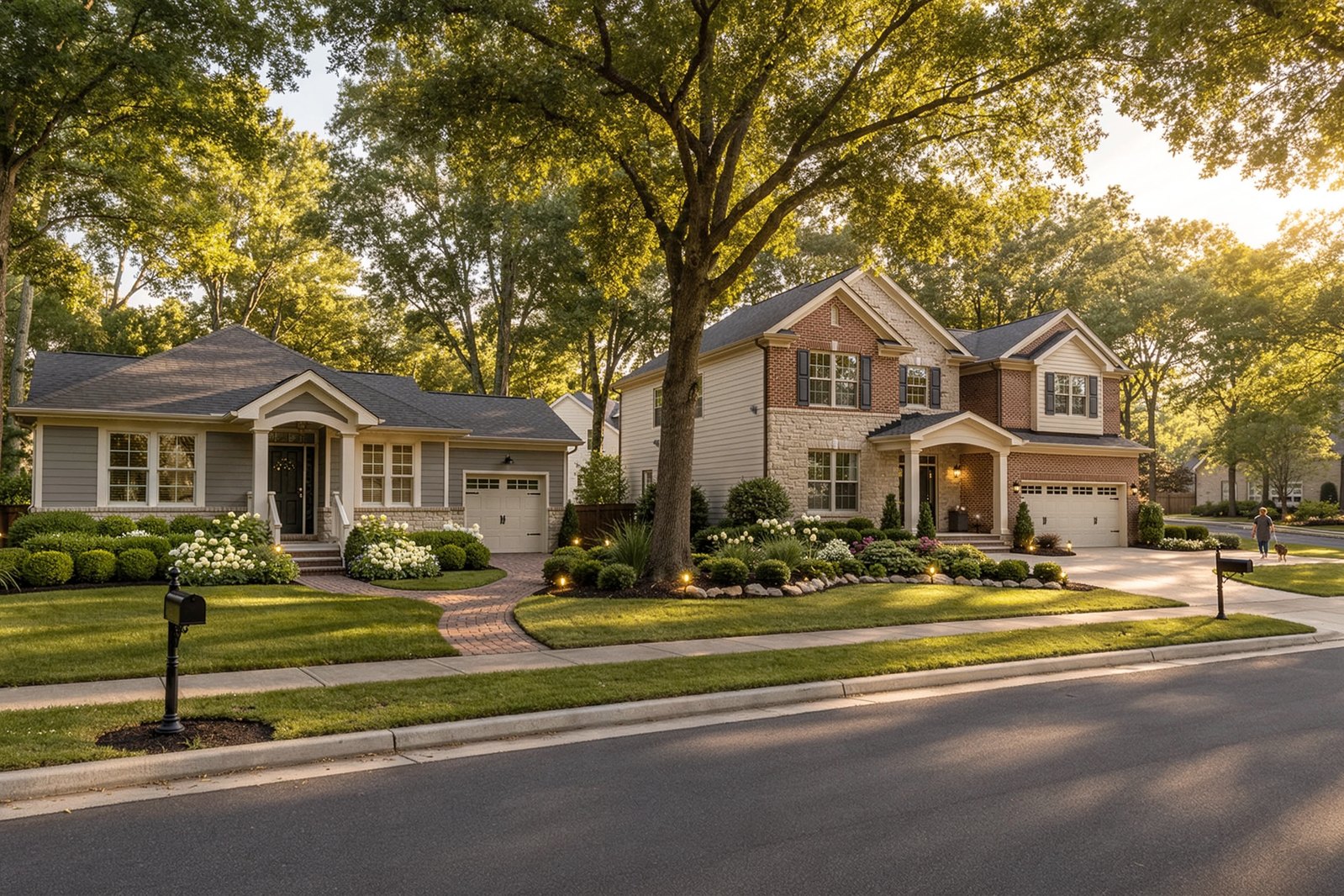
The hard part of a move-up here is rarely the search alone. It's lining up a floor plan and lot you'll actually want with a sale date you can live with. Before you tour anything, decide your must-haves and pick one timing structure with your lender.
How does moving up in Franklin Farm work when you also have to sell?
Moving up in Franklin Farm works best when you treat the sale of your current home and the purchase of the next one as a single decision. You define the floor plan and lot you need, confirm with your lender what timing structure you can afford, and set a fallback before you list or write an offer. Skip any of those three steps and the transaction, not the house, becomes the problem.
Key Takeaways
In an established subdivision like Franklin Farm, the limiting factor is usually the combination of floor plan and lot, not the number of homes on the market.
You have five common ways to time a move-up: list first, buy contingent on your sale, buy first, negotiate a rent-back, or use temporary housing and storage.
Your lender decides which structure is realistic, so get that answer before you tour, not after you fall for a house.
Four dates drive the whole plan: when your home is ready to list, when you need to find the replacement, the contract-to-closing window, and your latest acceptable move-out date.
County-wide numbers don't describe Franklin Farm, so the right way to price your sale and your purchase is a neighborhood-level analysis, not a portal estimate.
What should you decide before moving up in Franklin Farm?
Decide your non-negotiables before you tour a single home. In a neighborhood where most houses were built in a similar era, a short, clear list keeps you from chasing homes that look great online but miss the one thing you moved for.
When I sit down with a client who wants more space without leaving Franklin Farm, we start with a plain list:
Minimum bedroom count and how many you'll actually use
Office or flex space, and whether it needs a door and a window
Finished basement requirements, or tolerance for finishing one yourself
Garage capacity
Lot characteristics: level yard, backing to open space or trees, usable outdoor area
Renovation tolerance: move-in ready, light updates, or a project
Why are the right floor plan and lot hard to find?
Because you're looking for a pairing, and the pairing is what runs short. A floor plan you love may sit on a lot that slopes the wrong way. A great lot may carry a layout that would need real money to fix. In an established subdivision, that combination can take patience, and the number of active listings on any given day doesn't tell you how many homes truly fit your list.
This is why I tell clients to rank their list. Know which two or three items are deal-breakers and which are nice to have. That ranking tells you how far to flex when a near-match appears.
Why does staying in the neighborhood change the search?
You already know the routes, the amenities you use, and how the area works day to day. A move within Franklin Farm keeps all of that and changes only the house. That familiarity is an advantage, because you can judge a street, a lot orientation, or a commute without guessing. If you want a broader look at the area first, my Franklin Farm community guide covers the neighborhood itself.
Current numbers for Franklin Farm belong in a conversation, not a blog post, because they shift and they vary street by street. I pull neighborhood-level comparables for clients so both sides of the move are priced on real recent sales, not a countywide average.
Should you sell first, buy first, or make your offer contingent on your sale?
It depends on your financing and your tolerance for risk, and your lender's answer comes first. There's no single right sequence. There are five common structures, and each trades certainty on one side for pressure on the other.
| Structure | How it works | Main trade-off |
|---|---|---|
| List first, then shop | Your home goes on the market, then you make offers with a clearer picture of your proceeds | You may have to find the right house on a deadline |
| Offer contingent on your sale | Your purchase depends on your current home selling | Sellers may view it as less certain than a clean offer |
| Buy first | You close on the new home before your current one sells | You need the liquidity or qualifying capacity to carry both |
| Rent-back or delayed possession | You close on the sale but stay in the home for an agreed period | Requires a buyer willing to agree to it |
| Temporary housing and storage | You sell, move your belongings into storage, and rent short term | Two moves and extra logistics |
Can you buy a larger Franklin Farm home before selling your current one?
Yes, if a lender confirms you can qualify for the new purchase while still owning your current home. That's the question to put to your lender before anything else. Ask whether you can qualify while carrying both payments, what cash you'd need on hand, and what they'd want to see if the old home doesn't sell right away. I'm not a lender, so get that answer in writing from yours.
Should your offer be contingent on selling your current home?
A contingent offer protects you, but it can weaken your position, especially when a home you want is drawing attention. A seller weighing two offers may favor the one without a sale condition. That doesn't make contingent offers a bad idea. It means the strength of your offer should be judged against the specific house and the specific situation.
This is where having both sides handled by one agent helps. When I know how your current home is likely to be received, I can tell you how much risk a contingency actually carries before you write it.
Is it better to list first or shop first?
If you list first, you gain certainty about your proceeds and your timeline, but you take on a deadline to find the replacement. If you shop first, you keep the pressure off the search, but you carry uncertainty about what your home will net. For a Franklin Farm move-up where the right floor plan and lot may take time, many clients prefer to get the sale of their home prepared, with repairs scoped and pricing mapped, so they can move quickly in either direction. That's a conversation about your situation, and it's one I have with every move-up client before we list.
How do you avoid moving twice and protect yourself if the dates don't line up?
Build a four-date plan and decide your fallback in advance. Most move-up stress comes from the dates drifting apart with no plan for it. I walk clients through these four:
The date your current home is ready to list. That means repairs finished, decluttering done, and photos scheduled.
The date you need to find the replacement. Work backward from your target move.
Your target contract-to-closing window on both homes.
Your latest acceptable move-out date. This is the hard stop that drives your fallback.
What happens if your Franklin Farm home sells before you find the replacement?
You use your fallback, and you should know which one before you list. The usual options are a rent-back or delayed possession negotiated into your sale contract, short-term housing, or storage for your belongings. Each works better when it's built into the sale from the start. A rent-back is much easier to ask for in the original offer negotiation than after the contract is signed.
Both closings run through a title company, and keeping them in sync is part of the plan. I coordinate with the title company, your lender, and the other side's agent so the dates on both contracts are set with each other in mind.
How far should you widen your search if the right home isn't in Franklin Farm?
Widen it in steps, and only after you've confirmed your ranked list. Nearby parts of Western Fairfax County are the natural next step because they keep your routes and commute similar. Loudoun County is another option, but don't treat the two counties' medians as direct substitutes. Housing stock, lot size, age of homes, commuting patterns, and the mix of detached homes, townhomes, and condominiums differ enough to change the comparison. If you want to see how I think about nearby areas, my post on Franklin Farm and Herndon is a useful starting point.
If you're also thinking about the opposite direction later, I cover that in my post on downsizing in Franklin Farm. The planning logic is similar.
A note on costs
Selling and buying at the same time involves title, settlement, taxes, and possibly moving and storage costs. These vary with your price, your loan, and the terms you negotiate, so I don't put numbers on a page for them. I'll build a personalized net sheet for your current home so you know your proceeds before you make an offer. Broker fees are fully negotiable and not set by law, and any buyer-agent compensation is separately negotiable. We'll talk through that in your consultation.
If you'd like to see how past clients felt about working with me, you can read my reviews on Google and Zillow.
FAQ
Can I buy a larger home in Franklin Farm before selling my current house?
Yes, if your lender confirms you can qualify for the new purchase while still owning your current home and you have the cash to carry both. The answer depends entirely on your finances, so talk to a lender before you start touring.
How do I coordinate the sale of my Franklin Farm home with buying another home nearby?
Plan both as one sequence, with four dates mapped out and a fallback chosen in advance. I coordinate with your lender and the title company so the settlements are set with each other in mind, and I negotiate flexibility such as a rent-back into the sale when it's needed.
Are larger lots or specific floor plans in Franklin Farm difficult to find?
They can be, because you need the right floor plan and the right lot on the same property. In an established subdivision, that combination can take patience even when plenty of homes are listed. Ranking your must-haves before you tour keeps the search focused.
How can I avoid moving twice when buying a move-up home in Western Fairfax County?
Negotiate possession so the dates connect. A rent-back on your sale, a short gap bridged with temporary housing, or buying first if your financing allows can all help. The best option depends on your lender's answer and your timeline.
What if my home sells before I find the right replacement?
You fall back on the plan you made before listing. That usually means a rent-back or delayed possession in your sale contract, short-term housing, or storage. It's far easier to arrange these up front than after you're under contract.
What's your next step for moving up in Franklin Farm?
Start with your must-have list, your lender's answer on timing, and a neighborhood-level look at your current home. Those three things tell you which structure fits and how much room you have to be choosy. I've walked hundreds of clients through exactly this kind of sale-and-purchase sequence in Western Fairfax County, and I'd be glad to map yours out. Schedule a consultation or call 703-969-0471, and we'll build your four-date plan together.
About Cristina Dougherty
Cristina Dougherty is a trusted REALTOR® serving Fairfax and Loudoun Counties, Virginia since 2003. With over 500 homes sold and an average of 30 transactions annually, she specializes in downsizing, first-time buyers, and move-up sellers across neighborhoods like Franklin Glen, Franklin Farm, Armfield Farm, and Chantilly Highlands. She has been recognized in Washingtonian Magazine, Northern Virginia Magazine, and RealTrends America's Best, and holds over 200 five-star Zillow reviews.
Cristina Dougherty: 703-969-0471, GetKeyedUp@gmail.com
Paul Wesley Real Estate: www.PaulWesley.com
Equal Housing Opportunity. Cristina Dougherty, Sales License, Paul Wesley Real Estate. This article is general information, not legal, tax, or financial advice. Confirm your own numbers with your title company, tax advisor, or lender.